|
||||||||||
|









|
|
|
|
|||||||||||
 |
||||||||||||||
|
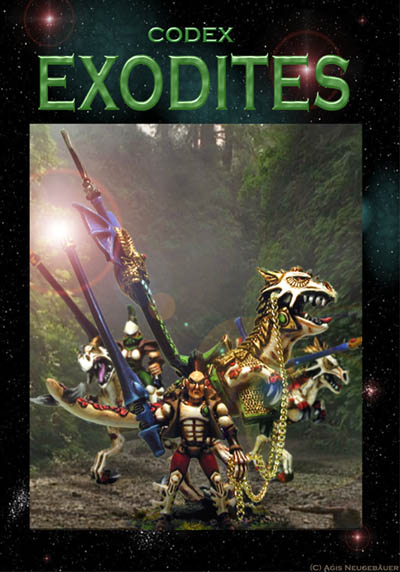
More than twenty years ago, together with Philip Bowles, I created the unofficial Codex: Exodites—combining Phil's extensive background and rules with my miniature conversions, painting, artwork and layout. I dug deep into my archives and even found the original black-and-white version of our 25-year-old Codex. Just click on the old cover to the left to download it. Our goal was to bring the mysterious Exodite Eldar to life as a fully playable army while staying true to the spirit of Warhammer 40,000. The project was widely shared within the community and is still remembered by many hobbyists today. Seeing Games Workshop finally return to the Exodites is the perfect excuse to dust off my original collection and showcase these conversions once again.
Ahead of Its Time Long before the Exodites finally received official miniatures, Philip Bowles expanded the sparse background from the early Eldar Codex into a rich and believable civilisation. His work explored the spiritual importance of the World Spirit, the role of Visionaries and Shamans, the unique society of the Maiden Worlds, and the bond between the Exodites and their dragon mounts. More than twenty years later, many of these same themes have become part of Games Workshop's official vision for the Exodites, including the World Spirit, the Stonesinger, and dragon-mounted warriors. Whether by coincidence or because these ideas naturally grew from the original lore, it is remarkable just how closely Philip's interpretation anticipated the direction the Exodites would eventually take.
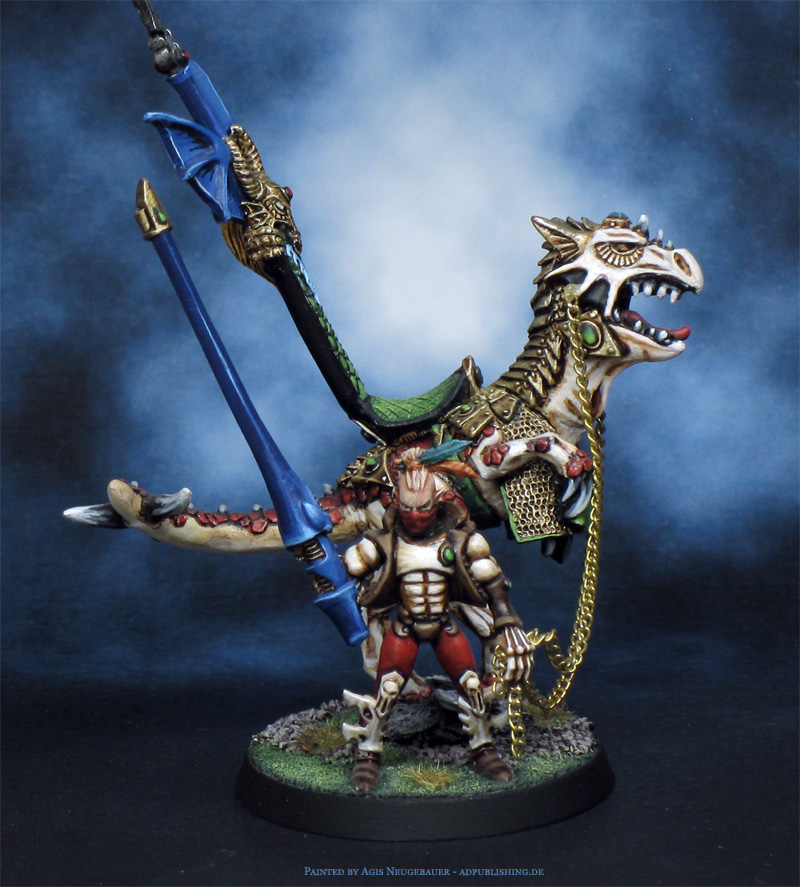
This Exodite Baron has been part of my collection for over two decades and remains one of my favourite Eldar miniatures. Creating him was an opportunity to combine extensive conversion work with the rich lore that Philip Bowles and I developed for the Codex: Exodites. Even today, I think he perfectly captures the unique blend of elegance, primal power and knightly tradition that makes the Exodites such a fascinating part of the Warhammer 40,000 universe.
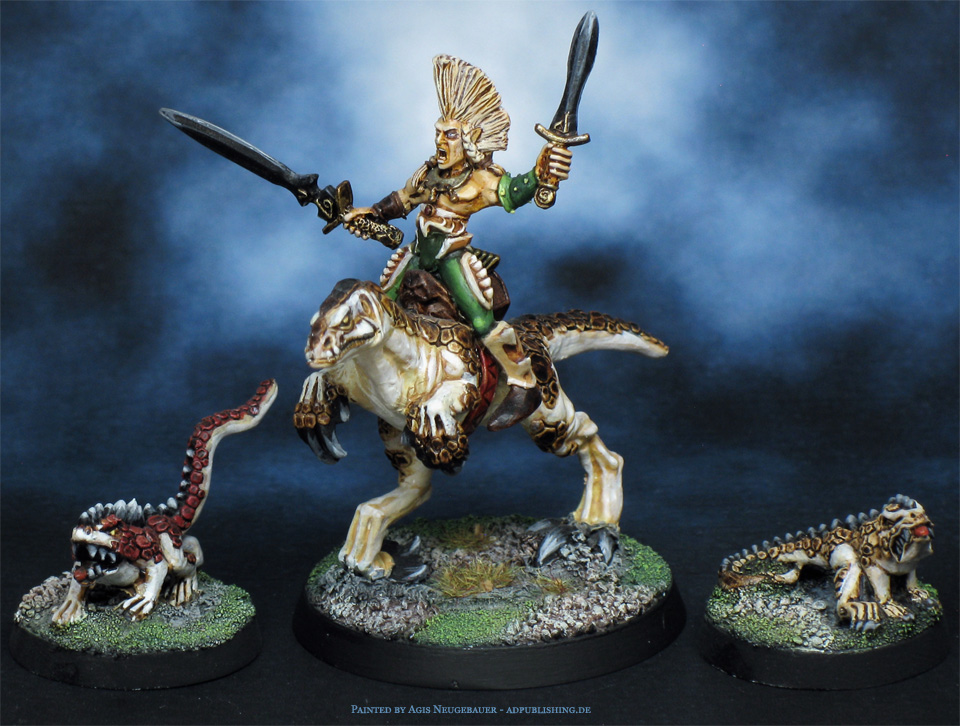
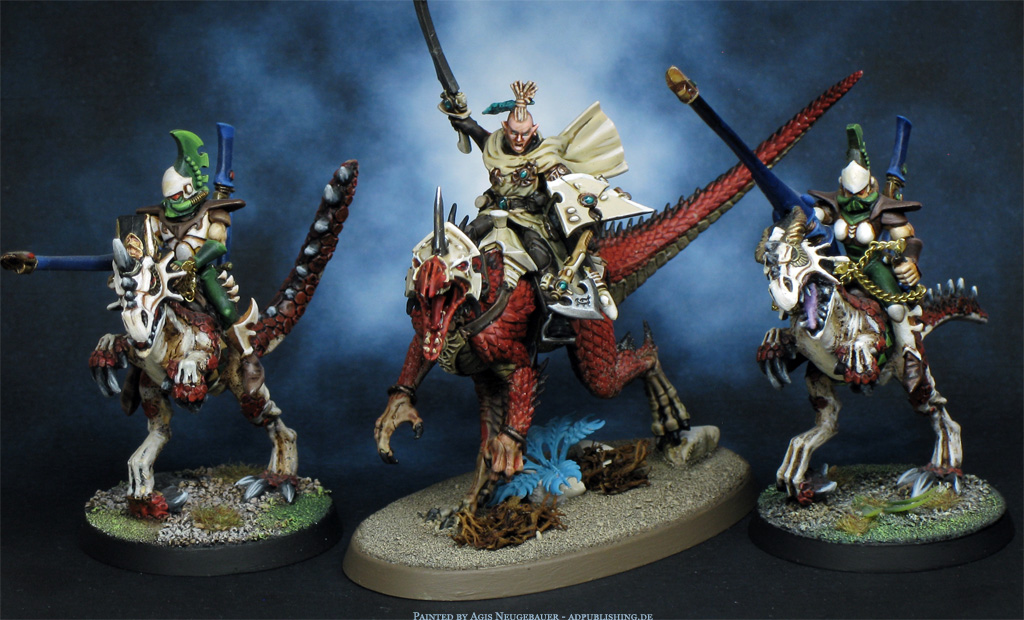
The Exodite Dragoons were conceived as the elite heavy cavalry of the army—the finest warriors in a Baron's household. Mounted on heavily armoured dragons and wielding devastating shock lances, they combined speed, resilience and overwhelming striking power. Converting this unit was particularly rewarding, as it blended classic Eldar aesthetics with a distinctly medieval, dinosaur-riding theme, creating one of the most iconic units of the entire Exodite project. Even after all these years, I still consider the Dragoons to be among the most characterful miniatures I have ever converted, capturing exactly the vision Philip Bowles and I had for the Exodites: noble Eldar knights adapted to the untamed wilderness of the Maiden Worlds.
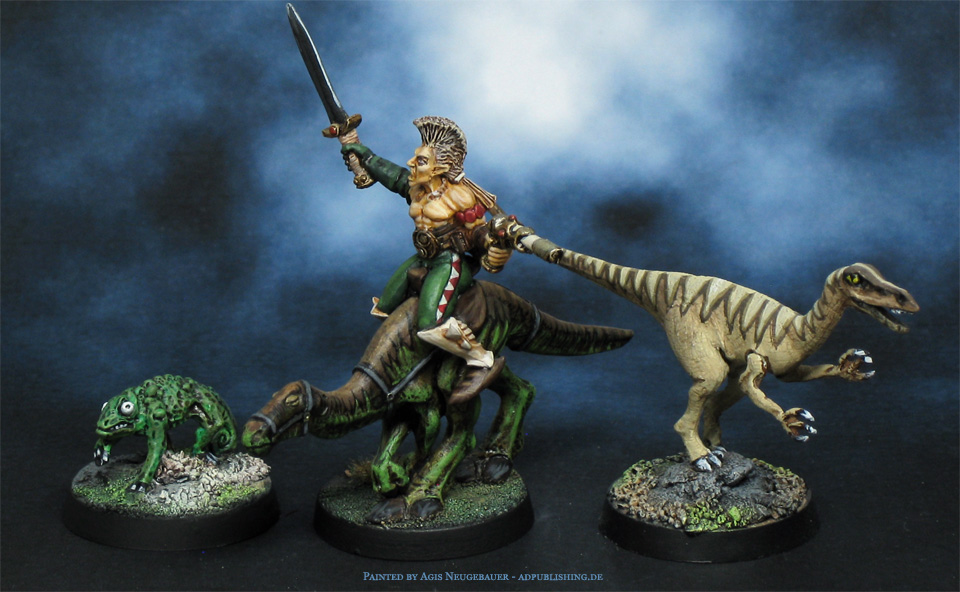
The Lethosaur Knights were designed as the Exodites' master scouts and skirmishers. Riding swift, lightly built herbivorous dragons, they relied on speed, stealth and hit-and-run tactics rather than brute force. Their unique role on the battlefield made them one of the most distinctive units in the Codex: Exodites, perfectly reflecting the Exodites' deep understanding of the wildlife of their Maiden Worlds. Converting the Lethosaurs was one of the greatest modelling challenges of the entire project, as there were no suitable Citadel miniatures available at the time. The final result, however, gave the army a completely different character and helped reinforce the idea that every Exodite mount had its own purpose, behaviour and battlefield role.
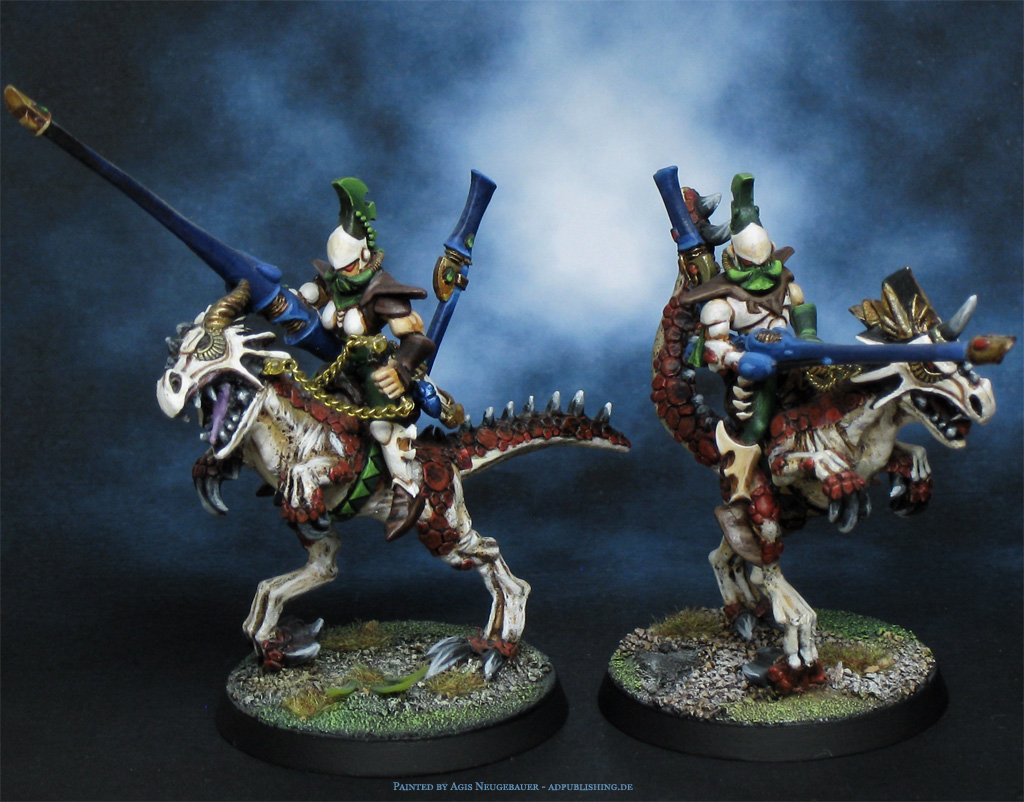
The Raptor Knights represented the fast attack element of the Exodite army. Mounted on agile, predatory Raptors, they excelled at scouting, flanking manoeuvres and lightning-fast assaults. Rather than relying on heavy armour, they used speed, camouflage and exceptional mobility to outmanoeuvre their enemies before striking with deadly precision. From a modelling perspective, the Raptors were among my favourite conversions. By extensively reworking the original Cold One miniatures, I was able to create mounts that looked faster, lighter and far more dynamic, giving the unit a distinctive silhouette that perfectly matched its battlefield role. Even today, I think they capture the wild spirit of the Exodites better than almost any other unit in the collection.
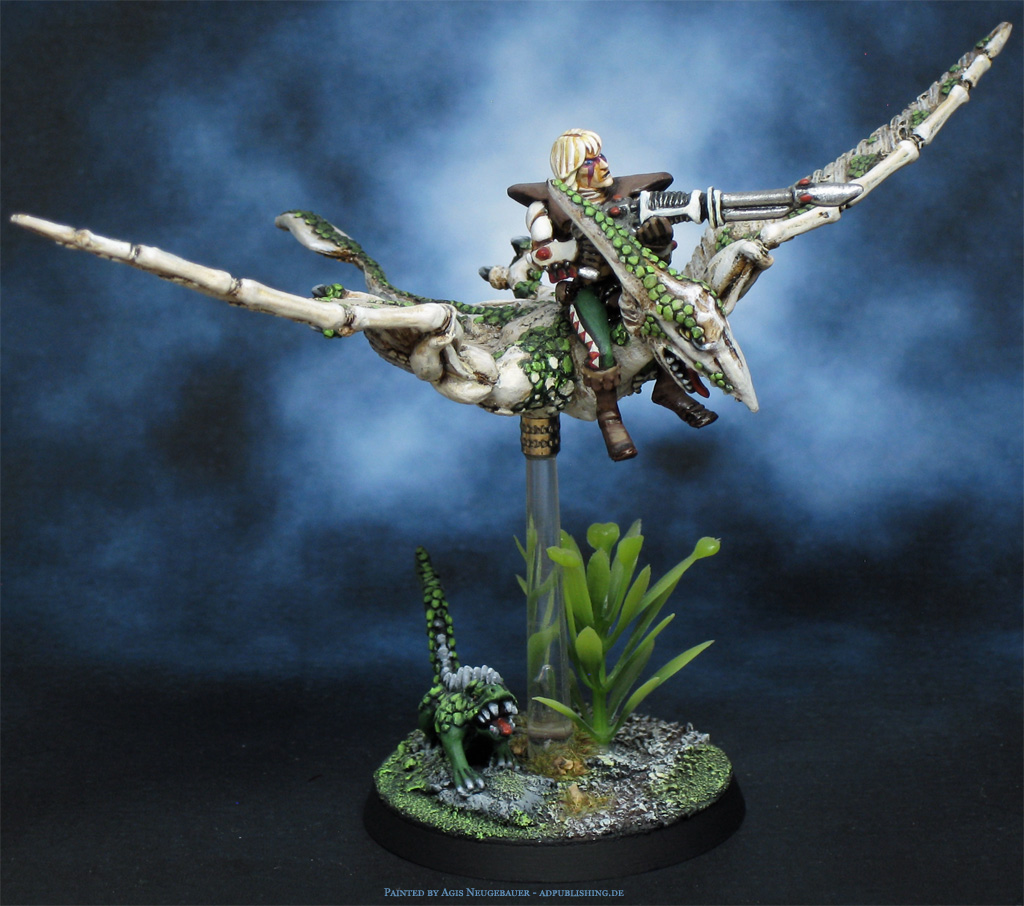
The Pterosaur Knights provided the Exodite army with unmatched mobility and aerial reconnaissance. Riding the only true flying creatures found on most Maiden Worlds, they could strike where the enemy least expected, scouting ahead of the main force or swooping down to support critical assaults. Their speed and versatility made them an invaluable part of any Exodite warhost. Unlike many of the other units, the Pterosaurs required only minimal conversion work, thanks to the excellent Warhammer Fantasy Terradon models. Instead, I focused on creating distinctive Exodite riders that blended seamlessly with the mounts. The result was a unit that perfectly captured the elegant yet predatory nature of the Exodites and added a dramatic vertical dimension to the army.
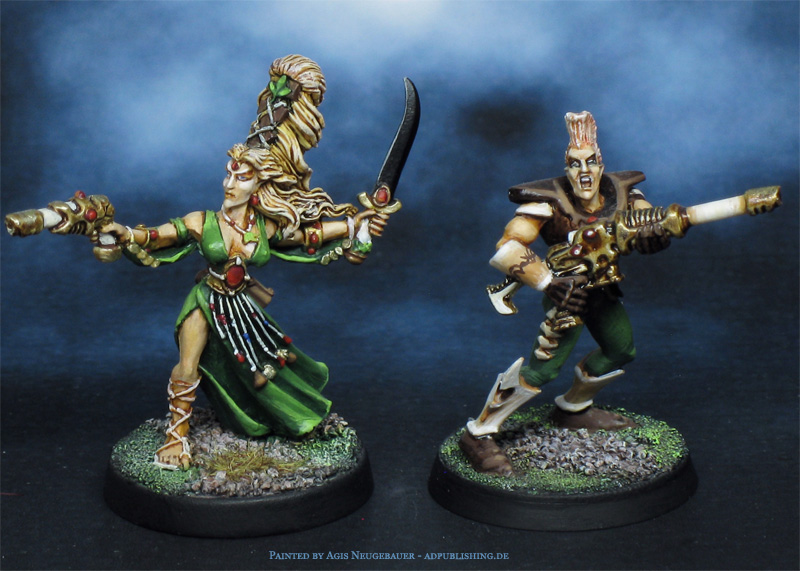
The Fusiliers formed the backbone of every Exodite warhost. Unlike the highly trained cavalry, they were the levied warriors of the Baron's domain, defending their homes and families with disciplined volleys of laser fire. Although less glamorous than the mounted knights, they were an essential part of the army and reflected the feudal structure of Exodite society. Every Fusilier warband could be accompanied by a Shaman, an apprentice Visionary whose role extended far beyond the battlefield. Drawing upon the power of the World Spirit, the Shaman protected and healed his companions, representing the deep spiritual bond between the Exodites and their Maiden Worlds. For the miniatures, I wanted to contrast the rugged appearance of the Fusiliers with the more mystical presence of the Shaman. While the warriors were converted to look like practical frontier soldiers, the Shaman received a more ceremonial appearance, reflecting his role as both healer and spiritual guide. Together they perfectly illustrated that the strength of the Exodites lay not only in their dragon riders, but also in the ordinary warriors and the ancient traditions they fought to preserve.
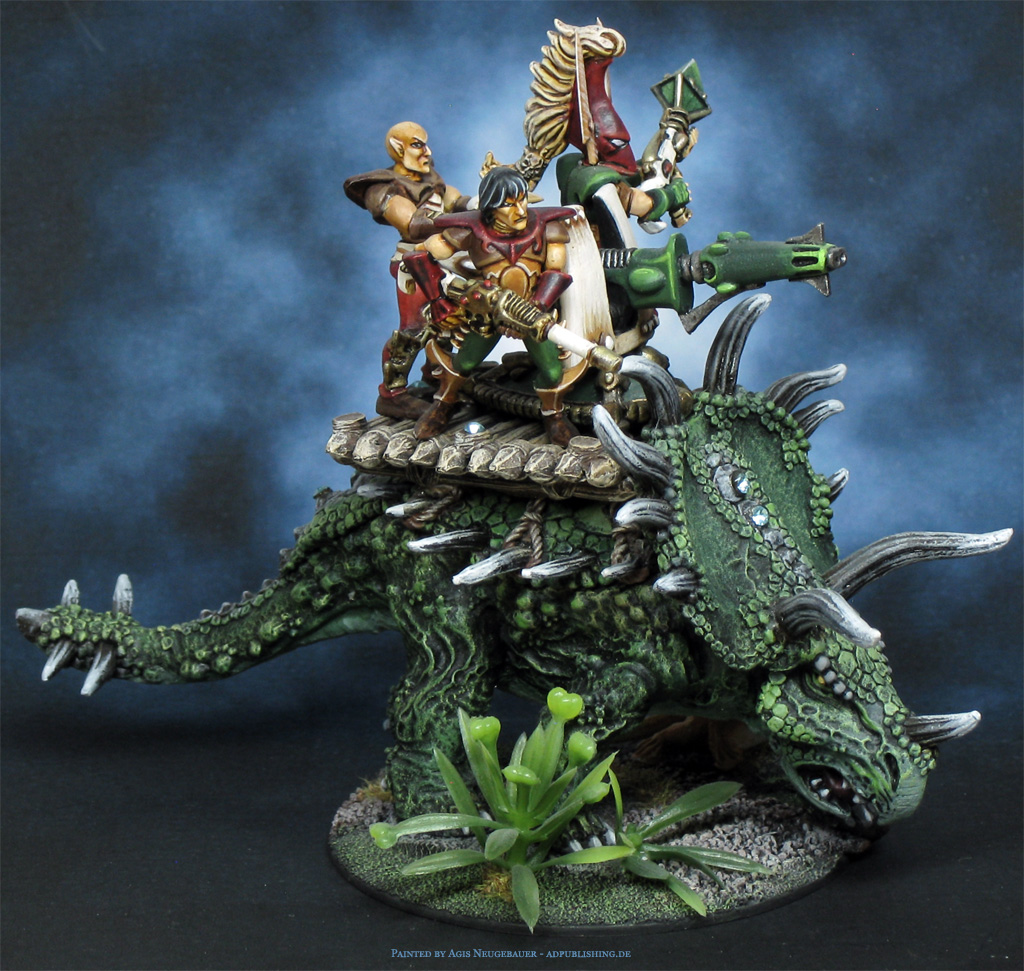
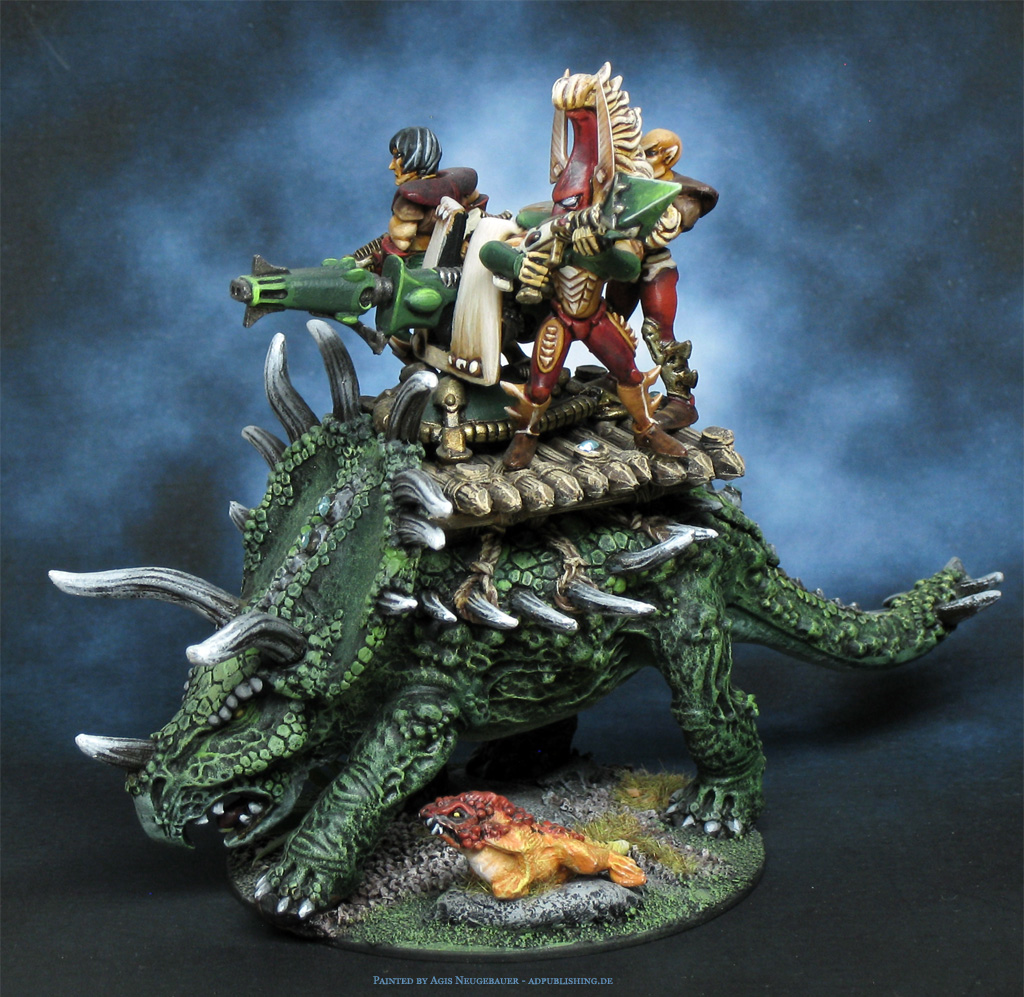
Towering above the battlefield, the Megadon was the undisputed giant of the Exodite army. More than just a living weapons platform, it embodied the unique bond between the Exodites and the mighty creatures of the Maiden Worlds. Carrying its crew and heavy weapon into battle, the Megadon combined immense resilience with devastating firepower, while remaining an unpredictable beast that could never be treated as a mere machine. Building the Megadon was one of the most enjoyable modelling projects of the entire army. Based on the Warhammer Fantasy Stegadon, it was transformed into a true Exodite war beast with an Eldar weapon platform and crew. It became the visual centrepiece of the collection and perfectly represented the philosophy behind the Codex: Exodites—blending advanced Eldar technology with the untamed wildlife of the Maiden Worlds. Even today, the Megadon remains one of my favourite creations. It captures everything I wanted the Exodites to be: noble, ancient and deeply connected to nature, yet fully capable of standing against the deadliest armies of the 41st Millennium.
Exodites – 25 Years Ahead of Their Time? - some musings after reading the official GW “Kill Team: Exodites” background and lore When Philip Bowles and I created our unofficial Codex: Exodites more than twenty years ago, the official Exodite background was still surprisingly sparse. Philip took those fragments and developed them into a much more complete vision of Exodite society, culture, spirituality and warfare.
The World Spirit Perhaps the most striking parallel is the World Spirit. Our Codex already described the World Spirit as a vast psychic network beneath an Exodite world, collecting the souls of the dead and linking them to the living. Waystones, psychic energy and the spiritual relationship between the Exodites and their world were central elements of Philip's background. Visionaries, Shamans and the Stonesinger Our Codex featured Visionaries and Shamans as spiritual figures closely connected to the World Spirit. They could draw upon its psychic power, communicate with the spirits of the dead and even heal their fellow Exodites. Dragon Knights The parallels become even more obvious with the Dragon Knights. In our Codex, Dragon Knights were the archetypal Exodite cavalry: elite warriors mounted on dragons and armed with laser lances, using their speed for devastating hit-and-run attacks.
From Dragoons to Dragon Masters Our Codex: Exodites also included the elite Dragoons, representing particularly experienced and formidable Dragon Knights. GW's new Dragon Masters take a rather different approach. Instead of simply being heavier cavalry, they form a ritual triumvirate of three specialists:
So while the concept has evolved considerably, GW has retained the idea of highly experienced Dragon Knights forming an elite cadre of specialists. A different society – but a familiar philosophy. There are also some significant differences Our Exodites were conceived as a feudal society, with Barons, households, land ownership and personal retinues. The new GW interpretation instead presents the Exodites as nomadic clans, with a much stronger emphasis on survival, tradition and territorial communities. So, did Philip predict the future? I certainly wouldn't claim that Games Workshop took its ideas from our Codex. There is no evidence for that, and many of the basic Exodite concepts obviously predate our project. But after comparing the two, I think it is fair to say something rather more modest – and perhaps more interesting: Twenty-five years ago, Philip Bowles developed a remarkably coherent interpretation of the Exodites, and many of the fundamental ideas he explored have now become central elements of Games Workshop's official vision.
The details have changed, and GW has taken the concept in its own direction. But looking at the two versions side by side after more than twenty years, I cannot help smiling. Perhaps Philip really was a little ahead of his time.
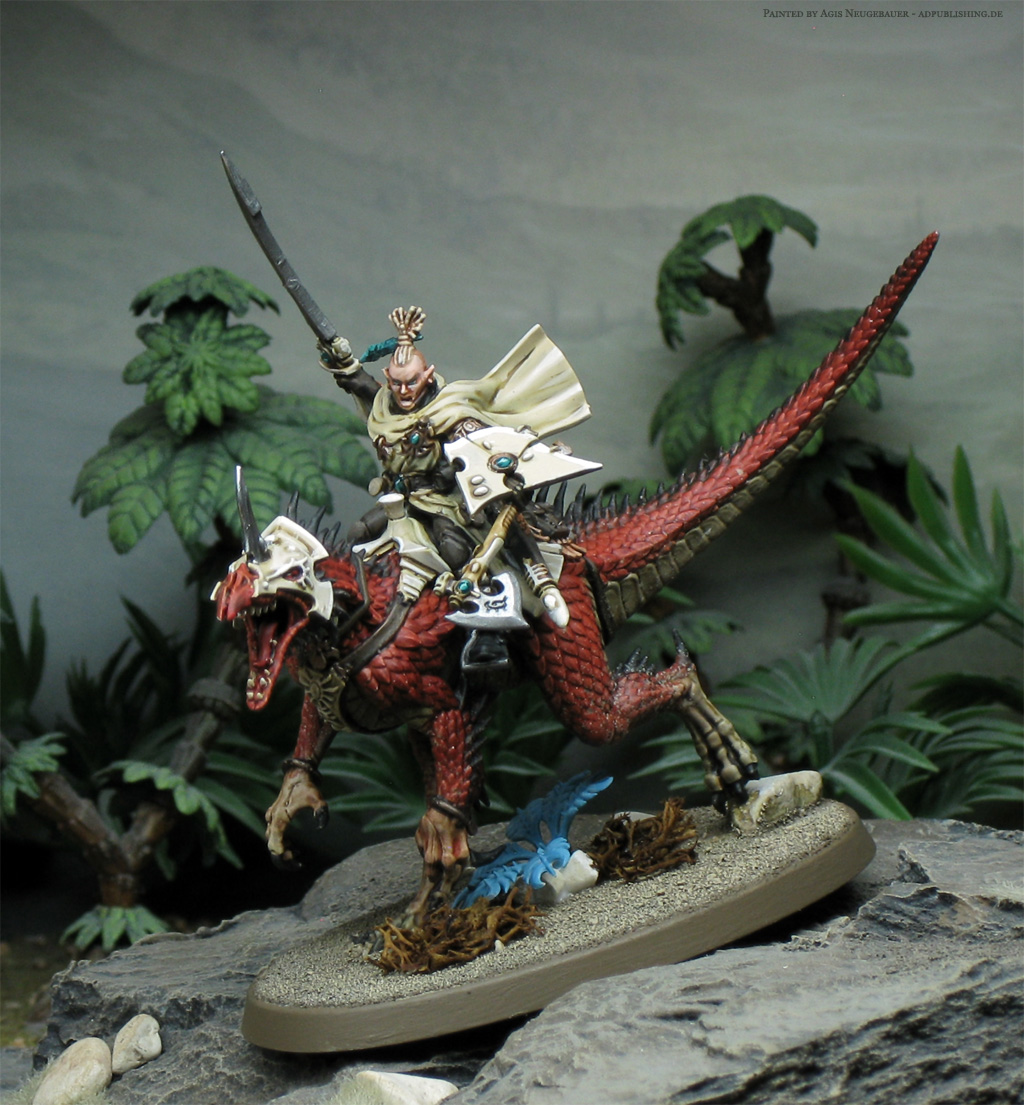
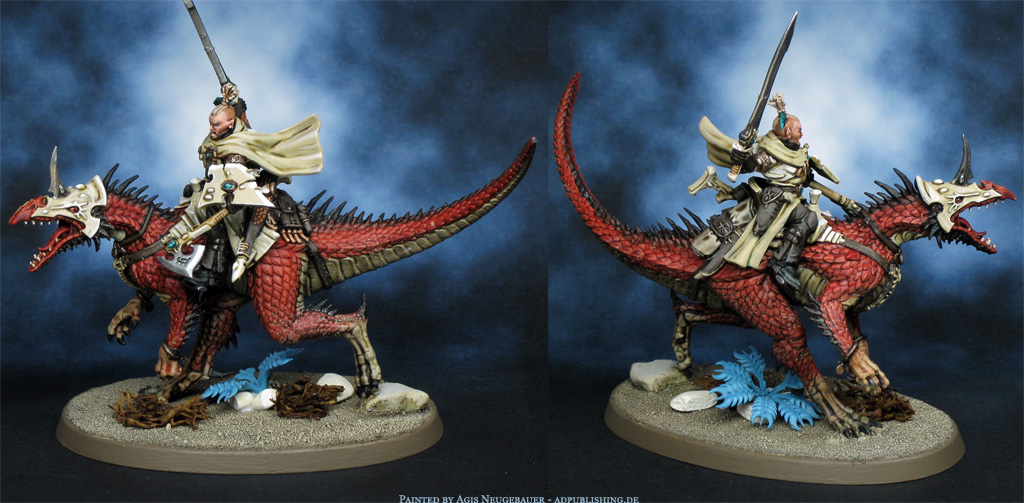
The new models I recently painted the new Clanblade Exodite in the same colour scheme as my older Exodite conversions. The new model is a significant improvement. Compared with my old conversions, the sculpt has an impressive amount of detail, excellent proportions and plenty of additional parts that can also be used for converting other Exodite models. Overall, it is a very successful kit and a lot of fun to paint. It is a little larger than I would have preferred, but that is hardly surprising given the inevitable GW “scale creep” over the years. Most importantly, it fits remarkably well with my older Exodites — and the classic colour scheme brings the whole collection together.
|
||||||||||||||